Adapt or Die
The quiet skill that separates the lucky from the legendary
Yesterday I wrote about the most important part of good trading: position sizing.
Today I want to talk about the other important part of trading.
You.
Your mind.
Your body.
Your health.
Whenever I say “keep a trading journal,” people assume I mean spreadsheets and formulas. Something complex. Something that crunches numbers.
That’s not what I mean.
I mean waking up in the morning and asking yourself:
How am I feeling today?
Too excited? Too lazy? Too eager to win? Too scared to lose?
You don’t want to be a 10 or a 1. You want to be a steady 5. Calm. Present. Focused.
That’s the sweet spot.
Yes, systems help. Algorithms help. But no system runs without you pressing enter. And if you’re off — even a little — everything skews.
That’s why all the “weird” stuff I post about is about trading.
The bees.
The garden.
Basketball.
Working out.
Bike rides.
A kale smoothie I regret but will finish anyway.
Time with family.
Road trips.
All of it.
It’s easy to think these things are distractions from the market.
But they’re not.
They’re the foundation.
Bees and Bollinger Bands buzz in harmony because everything is connected.
To be a good trader, you have to know the market.
To be a great trader, you have to know yourself.
Balance isn’t a luxury. It’s a requirement.
Sometimes the Best Move Is to Do Nothing
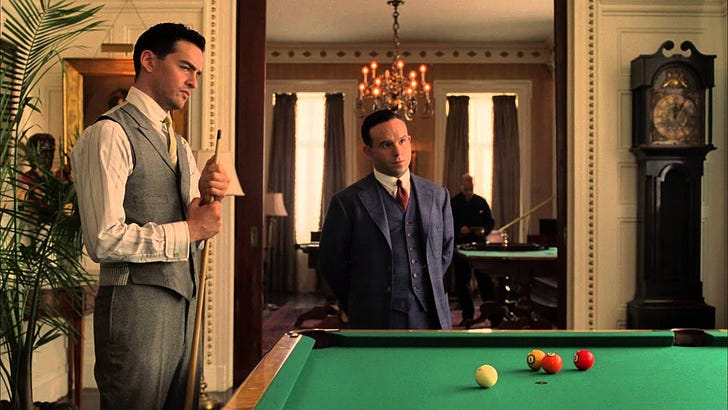
Boardwalk Empire: Shot to Nothing
In one of his more candid reflections, Stanley Druckenmiller talked about the year he thought his legendary streak had come to an end.
Down 18% heading into summer, he figured the game was up. The no down year record? Broken. He could’ve forced trades, chased losses, tried to will his way back. Instead, he stepped away. Not for a few days. For the whole summer. “Walled in his misery,” as he put it.
It’s easy to romanticize discipline. It’s harder to admit that sometimes discipline looks like sitting on your hands.
When he came back, things looked good on the surface. The S&P was up. The Nasdaq was rallying. But the dollar, interest rates, and oil were all rising — historically, a triple threat to equity markets. Something didn’t add up.
So he did something else most people don’t: he asked questions. He called Ed Hyman, an economist known more for his thinking than his headlines. Hyman had done the work. His models said earnings were going to fall 36% — while the rest of Wall Street was still calling for an 18% rise.
Armed with that insight, Druckenmiller didn’t just adjust his position. He flipped the board. Shorted the market. Bought Treasuries. Tripled down.
And then he waited.
For a while, it didn’t work. That’s the part people skip over. You can be right eventually and still look wrong for a long time.
But then the economy cracked, just as the Gore vs. Bush drama unfolded. Druckenmiller ended the year not down, but up — up 40% in just the fourth quarter.
There’s a lesson in there, but it’s not just about trade setups or economic models.
It’s that sometimes the best thing you can do is step away. Let go of the need to act. Let the storm pass. Let your mind clear.
And when you come back — not desperate, not emotional, but curious — that’s when you see things others miss.
Patience isn't passive. It’s a skill. One that, occasionally, turns a -18% summer into a +40% winter.
Lessons like this, will make you a lot more money than a stock pick ever could.
Portfolio Weights
If you would like to see our full portfolio with our futures and options trades, entries and exits…
Adapt or Die
Markets don’t ask for certainty. They ask for flexibility.
If global growth is going to pick up, you’ll likely see it first in the copper-to-gold ratio. Historically, it moves in sync with the 10-year yield — and right now, there’s a gap. If that gap closes, copper’s about to get loud.
And it’s already whispering.
Copper just hit a 52-week high.
International stocks are starting to move with it.
Momentum tends to make noise before people start listening.
I think copper’s going to get stronger here. I really do.
But here’s the key: I’m ready to be wrong.
The best traders — the Druckenmillers of the world — don’t marry predictions. They marry process. They flip the book when the story changes. They hold opinions loosely and conviction tightly — but only when the data backs it.
Right now, we’re outperforming the S&P by more than 30%. That’s not a time to relax. It’s a time to stay alert.
Markets reward those who adapt faster than they panic.
In the end, the edge isn’t in being right.
It’s in being ready.
Against All Odds Research
Stay Connected:
YouTube: Against All Odds Research Channel (@againstalloddsresearch)
Twitter: Jason P (@jasonp138)
Substack: AAO Research
Support the Bees: Help save the native bees! Learn more and get involved here.


Marvelous take. Cheers Jason and have a relaxing weekend.