
Breaking it Down: Bruce Kovner
'Breaking It Down,' where we embark on a journey into the world of futures, commodities, bonds, equities and more! In this edition, we shift our spotlight to Bruce Kovner.

Kovner's trading prowess can be traced back to his tutelage under the likes of Michael Marcus, a protégé of notable traders Ed Seykota and Amos Hostetter, the founder of Commodities Corp. However, Kovner maintains a low profile despite his remarkable success, shying away from the limelight with only a few publicly available speech transcripts and minimal presence on digital platforms.
Bruce Kovner embodies the qualities of an exceptional trader, boasting impressive achievements such as a remarkable ~90% compound annual growth rate (CAGR) during his tenure at Commodities Corp and later sustaining a ~21% compounded capital growth over 28 years when he established his own trading firm.
Kovner from a humble starting point of a borrowed $20,000 to a remarkable net worth exceeding $6 billion.
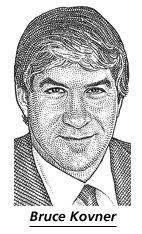
Bruce Kovner's Journey to Success: Michael Marcus instilled in Bruce Kovner the belief that immense wealth was attainable in trading, inspiring him to harness his potential despite starting with a modest $20,000 borrowed capital. Kovner recalls Marcus's impactful advice, "He taught me that you could make a million dollars. He showed me that if you applied yourself, great things could happen. It is very easy to miss the point that you really can do it. He showed me that if you take a position and use discipline, you can actually make it."
The Crucial Role of Risk Management: Kovner's profound understanding of risk management shines through in his trading approach. Stressing the emotional strain associated with trading, he advises caution, stating, "The emotional burden of trading is substantial; on any given day, I could lose millions of dollars. If you personalize these losses, you can't trade." To maintain equilibrium, he highlights the necessity of controlled risk-taking, advocating, "Undertrade, undertrade, undertrade is my second piece of advice. Whatever you think your position ought to be, cut it at least in half."
Significance of Effective Position Sizing: Kovner's emphasis on prudent position sizing underscores its pivotal role in his trading strategy. By advocating for smaller trade sizes, he underscores the need for emotional stability and balance, asserting, "Risk management is the most important thing to be well understood... Whatever you think your position ought to be, cut it at least in half." This disciplined approach not only safeguards against substantial losses but also enables traders to capitalize on lucrative opportunities.
Integrating Fundamental and Technical Analysis: Kovner's trading methodology revolves around the integration of fundamental and technical analysis. Recognizing the importance of a comprehensive approach, he affirms, "I almost always trade on a market view; I use technical analysis a great deal and it is terrific, but I can't hold a position unless I understand why the market should move." His strategy involves aligning fundamental market views with technical indicators to make informed trading decisions.
Understanding Market Signals through Technical Analysis: Kovner's analogy of technical analysis as a thermometer reflects his belief in its indispensable role in interpreting market dynamics. Emphasizing the importance of comprehending market behavior, he explains, "If you are a responsible participant in the market, you always want to know where the market is - whether it is hot and excitable, or cold and stagnant. You want to know everything you can about the market to give you an edge." This approach highlights the significance of technical analysis in navigating market complexities.
Balancing Caution and Vision: Kovner's trading philosophy encapsulates the delicate balance between caution and vision. By prioritizing risk management, meticulous position sizing, and a comprehensive understanding of market behavior, traders can imbibe Kovner's wisdom to navigate the intricate world of trading successfully.
My personal favorite from Bruce Kovner is this:
Is that to say that virtually every position you take has a fundamental reason behind it?
I think that is a fair statement. But I would add that technical analysis can often clarify the fundamental 29 picture. I will give you an example. During the past six months, I had good arguments for the Canadian dollar going down, and good arguments for the Canadian dollar going up. It was unclear to me which interpretation was correct. If you had put a gun to my head and forced me to choose a market direction, I probably would have said "down." Then the U.S./Canadian trade pact was announced, which changed the entire picture, hi fact, the market had broken out on the upside a few days earlier, as the negotiations were finishing up. At that inSant, I felt completely comfortable saying that one of the major pieces ii the valuation of the Canadian dollar had just changed, and the marlet had already voted. Prior to the agreement, I felt the Canadian dollar was at the top of a hill, and I wasn't sure whether it was going to roll backwards or forwards. When the market moved, I was prepared to go with that movement because we had a conjunction of two important element!: a major change in fundamentals (although, I wasn't smart enough to know in which direction it would impact the market), and a technical price breakout on the upside.
What do you mean you weren't smart enough to know in which direction the trade pact announcement would move the market? Since U.S./Canadian trade is so much a larger component of Canadian trade than it is of U.S. trade, wouldn't it hive been logical to assume that the trade pact would be bullish for the Canadian dollar?
It didn't have to happen that way. I could just as easily have argued that the trade pact was negative for the Canadian dollar because tie elimination of the trade barriers would allow imports from the Ш. to submerge Canadian interests. There are still some analysts who adhere to that argument. My point is that there are well-informed traders who know much more than I do. I simply put things together. They knew which way to go, and they voted in the marketplace by buying Canadian dollars.
Source: Market Wizards
Jason Perz/AAO Research