
I'm Not Buying

I have always loved The Gambler by Kenny Rogers.
Most people remember the famous line:
“You've got to know when to hold 'em. Know when to fold 'em. Know when to walk away. And know when to run.”
But the older I get, the more I realize the song isn’t really about gambling.
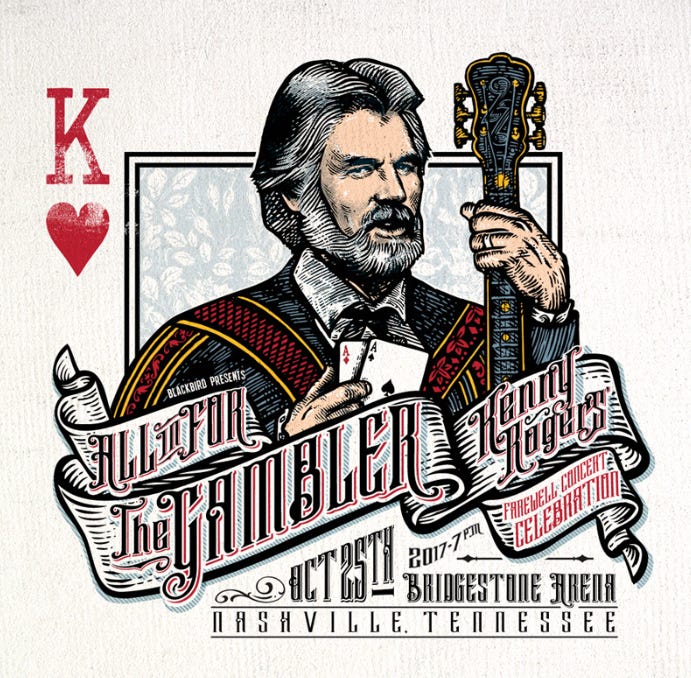
It’s about patience.
It’s about discipline.
It’s about understanding that not every hand is worth playing.
And right now, that’s a lesson a lot of traders need to hear.
We’re coming off a drawdown. Some positions have been stopped out. A few trades didn’t work. That’s part of the game.
Yet every time this happens, I start getting the same questions:
“What’s the next trade?”
“What should I buy?”
“How do I make it back?”
What people are really asking is:
“How do I get back to my equity high as fast as possible?”
That’s the wrong question.
In fact, it might be the most dangerous question a trader can ask.
Because when you become emotionally attached to making your money back immediately, you stop thinking like a trader and start thinking like a gambler.
The Most Dangerous Place a Trader Can Be
In poker they have a term for this.
It’s called tilt.
Tilt happens when a player loses a hand and becomes emotional. Instead of continuing to play their strategy, they start trying to force outcomes.
They bet too much.
They chase bad hands.
They abandon their edge.
They stop making rational decisions.
They start making emotional ones.
Most traders have experienced tilt whether they realize it or not.
A few losing trades hit.
A drawdown starts.
Confidence drops.
Then suddenly every chart looks like an opportunity.
Every setup looks tradable.
Every move feels like the one that will make everything right again.
That’s when accounts get destroyed.
Not during the drawdown itself.
During the emotional response to the drawdown.
The irony is that the drawdown usually isn’t what causes traders to fail.
Their reaction to the drawdown is.
Do the Opposite of Most Traders
One thing I’ve learned over the years is that most traders fail.
The exact percentage doesn’t matter.
Maybe it’s 80%.
Maybe it’s 90%.
Maybe it’s higher.
The point is that the majority of market participants lose money.
The failure rate becomes even higher the shorter the timeframe.
The shorter you trade, the more emotional decisions tend to matter.
The longer your timeframe becomes, the more patience starts to matter.
Whenever I’m uncertain about what to do, I ask myself a simple question:
“What is the average trader doing right now?”
Then I try to do the opposite.
The average trader panics during drawdowns.
The average trader starts forcing trades.
The average trader increases risk after taking losses.
The average trader abandons their process because they’re frustrated.
The average trader becomes obsessed with getting back to breakeven.
I don’t want to be average. The average trader loses money.
Neither should you.
Drawdowns Are Not a Bug
One of the most important lessons trend following taught me is that drawdowns are not evidence that something is broken.
They’re evidence that you’re participating.
Every meaningful trading strategy experiences drawdowns.
Every great trader experiences drawdowns.
Every long term track record contains periods where nothing seems to work.
The mistake most investors make is treating drawdowns like a verdict.
They’re not.
They’re simply part of the process.
I’ve always liked how Winton Capital described drawdowns. They pointed out that investors often treat maximum drawdown like a scarlet letter that follows a manager forever, even though drawdowns are often completely normal and consistent with the strategy itself.
A drawdown doesn’t automatically tell you anything is wrong.
The real question is whether you’re following your process.
Did you obey your rules?
Did you manage risk properly?
Did you take the trades your system told you to take?
If the answer is yes, then the drawdown is simply part of doing business.
Patience Is a Position
The reality is that there aren’t many great trades setting up right now.
I know that’s frustrating.
I know people want action.
I know people want to make back every dollar immediately.
But the market doesn’t care.
Sometimes the best trade is no trade.
Sometimes the highest probability position is cash.
Sometimes the smartest thing you can do is sit quietly and wait.
That’s not weakness.
That’s professionalism.
The best traders I’ve ever met all shared one characteristic:
They could wait.
They understood that opportunities come in waves.
They knew they didn’t have to swing at every pitch.
And they understood something most people never learn:
You don’t get paid for activity.
You get paid for being right.
Thousands of years before there were digital stock markets, philosophers understood this.
Lao Tzu wrote:
“Nature does not hurry, yet everything is accomplished.”
The market will provide another opportunity.
It always does.
The question is whether you’ll still have the capital, discipline, and emotional stability to take advantage of it when it arrives.
So don’t revenge trade.
Don’t go on tilt.
Don’t force a hand that isn’t there.
And remember the wisdom hidden inside an old Kenny Rogers song:
Sometimes the most profitable thing you can do is know when to hold ‘em, know when to fold ‘em, and know when to simply sit there and wait for the next hand.
For now, we will be patient.
Against All Odds Research
Stay Connected:
YouTube: Against All Odds Research Channel (@againstalloddsresearch)
Twitter: Jason P (@jasonp138)
Substack: AAO Research
Support the Bees: Help save the native bees! Learn more and get involved here.
strong conviction - loosely held. my new motto. Lots of stops being hit and I am OK putting the proceeds into SGOV right now. Process over feelings.
For sure. It has been going just horribly since mid May. Breakouts failing all over the place. Ugh!