
The Match and the Fuse
When policy becomes gasoline. Trump’s 50 year mortgage and $2,000 checks might be the spark that lights the next commodity boom.

When Policy Becomes Gasoline
We already had a dozen reasons to be bullish on commodities.
Now we’ve got two more that pour gasoline on the fire.
First, Donald Trump floated giving Americans $2,000 checks funded by tariff revenue. Second, he wants to introduce a 50 year mortgage. You read that right — half a century of debt.
Put those headlines next to the chart of the CRB Index — now sitting in the tightest volatility squeeze in its history — and the setup speaks for itself. All this chart needs is a match.
We’ve Seen This Movie Before
Every inflationary boom starts the same way: governments throw money at the people while simultaneously engineering new ways to expand credit.
During the Great Depression, Franklin D. Roosevelt’s administration faced collapsing home prices, mass defaults, and frozen credit markets. The solution was radical for its time — a new, long-dated instrument called the 30 year fixed rate mortgage.
It was part of the New Deal housing reforms. The Home Owners’ Loan Corporation was created in 1933, and by 1949 the FHA made the 30-year mortgage the new standard. It turned home ownership from a dream into attainable for the middle class.
But it also permanently changed the structure of the U.S. financial system. Long-term mortgage debt became the foundation for trillions in credit creation — a slow-burn liquidity engine that powered decades of growth, speculation, and inflation.
Now Trump is proposing the next iteration: a 50 year mortgage.
The 50-Year Mortgage: Stretching Time to Keep the Game Going
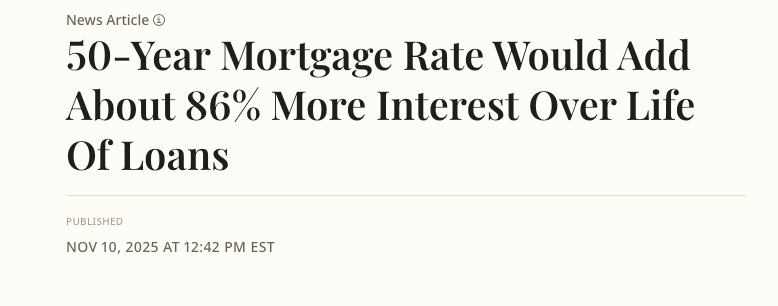
On paper, it sounds like relief. Lower monthly payments, more “affordable” homes, easier access to credit. In practice, it’s a lifetime commitment to debt — a product that stretches the illusion of affordability by stretching time itself.
A 50 year loan would add roughly 86% more interest over its life compared to a standard 30 year mortgage. Homeowners would build equity at a snail’s pace. The banking system, on the other hand, would enjoy decades of predictable income and securitization fuel.
This is how bubbles are extended, not solved. It’s financial elasticity — the constant attempt to stretch balance sheets and timelines to keep the system stable a little longer.
And every time policymakers stretch the system, they inject liquidity somewhere. That liquidity doesn’t sit still. It moves. It flows. It seeks return.
Where it ends up is the story of the next cycle.
Tariff Dividends: Helicopter Money 2.0
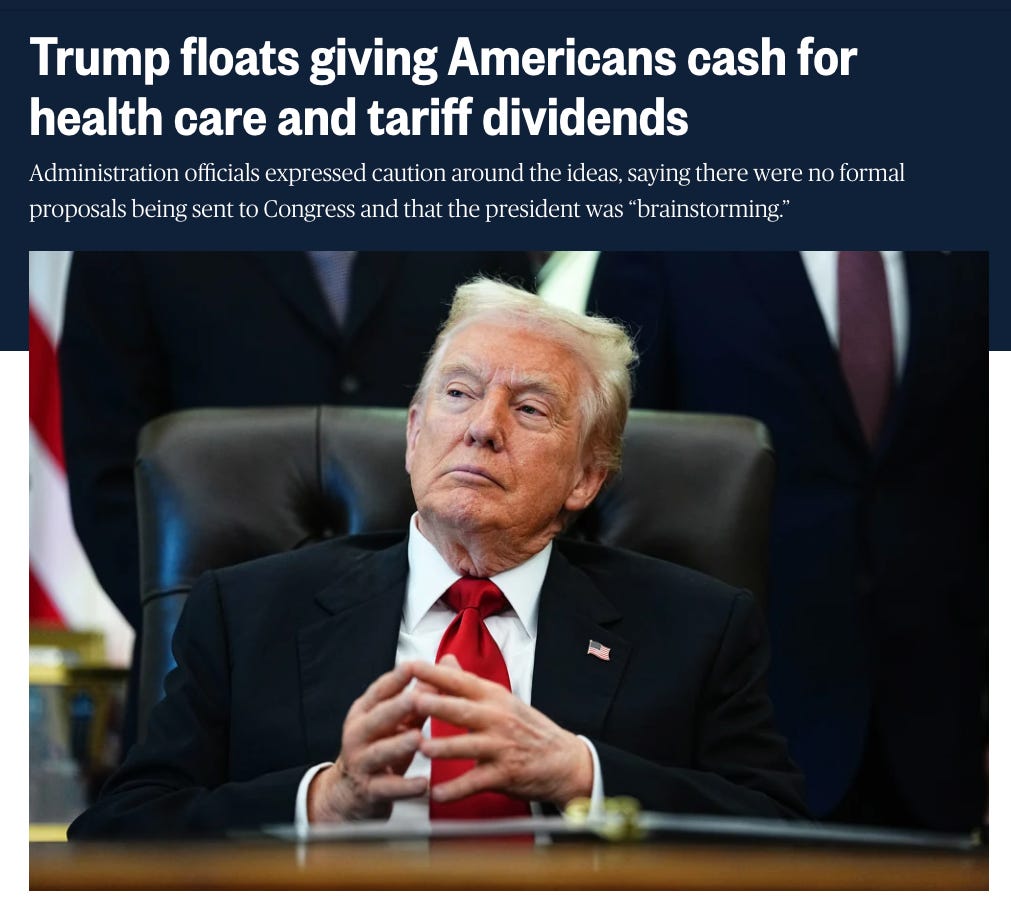
Then there’s the other piece — $2,000 checks funded by tariff revenues. It’s a clever political headline, but economically it’s just another version of direct stimulus.
We saw this playbook in 2020. Pandemic checks, PPP loans, Fed rate cuts — all firing at once. The result? Inflation surged, asset prices exploded, and commodities went vertical.
This time, the setup rhymes but with a twist. Instead of fighting deflation, we’re fighting stagnation — higher costs, slower growth, and a political appetite for “solutions” that feel good in the short term but fuel the next inflationary pulse.
Tariffs are a tax on imports. Using those proceeds to hand out cash is redistribution by another name. It injects demand directly into the system, bypassing productive investment and heading straight into consumption.
That’s exactly what lights a fire under commodity demand. When households suddenly have extra spending power — whether from pandemic checks, tax cuts, or “tariff dividends” — the first impact isn’t in tech stocks. It’s in energy, metals, and food.
The Match and the Fuse
Now look at the third image — the chart of the Reuters/Jefferies CRB Index, which tracks a basket of commodities heavily weighted toward energy: oil, gasoline, heating oil.